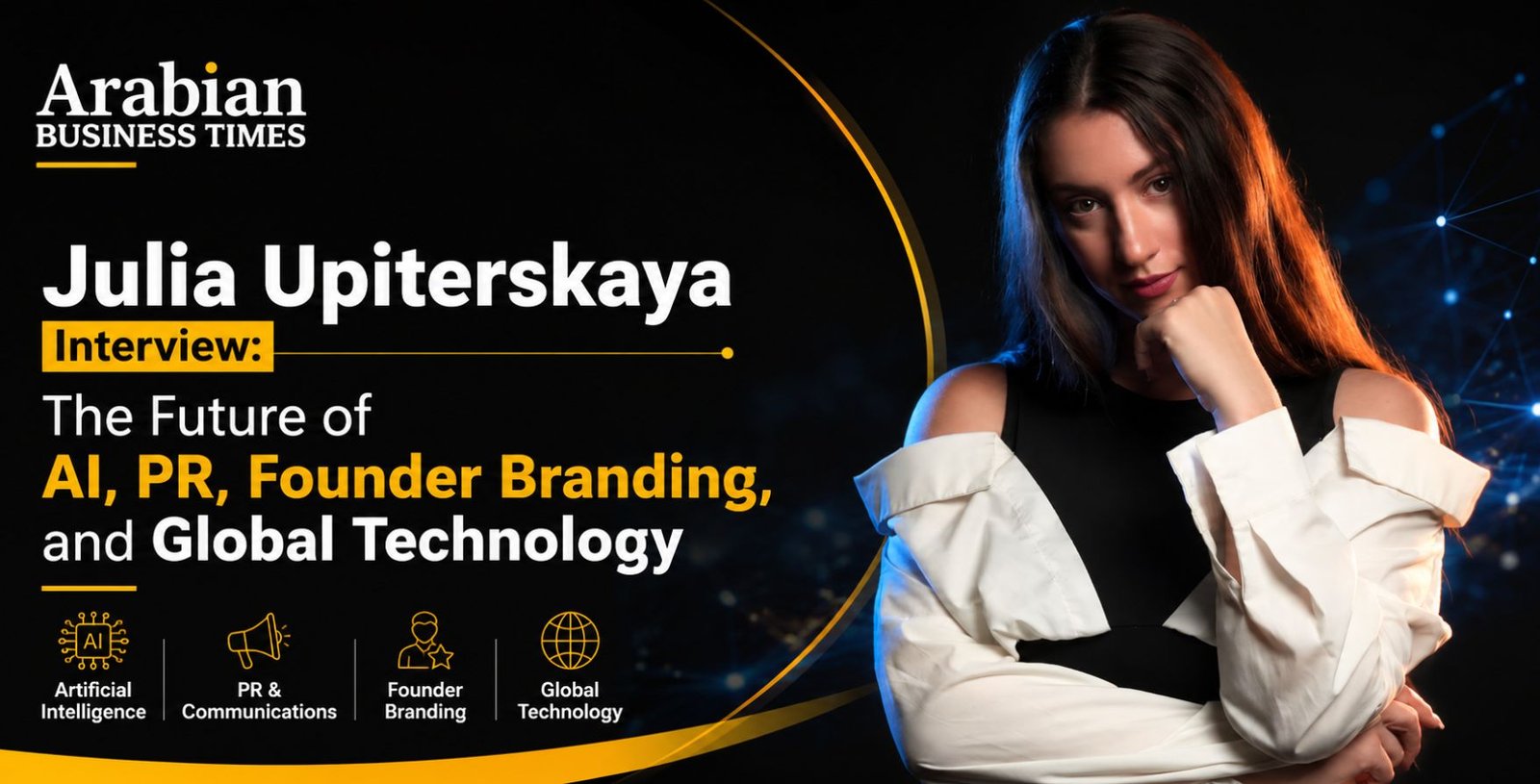
In today’s fast-changing technology landscape, innovation alone is no longer enough. Companies must also build credibility, communicate their vision effectively, and establish meaningful relationships to achieve sustainable business growth. In this exclusive interview with Julia Upiterskaya, Founder of JULS, we explore her journey from media and communications to becoming a trusted strategic advisor for technology companies across AI, Web3, fintech, and emerging innovation sectors. She shares valuable insights on founder branding, the evolving role of artificial intelligence in communications, global technology ecosystems, and the strategies that help businesses build lasting influence in competitive markets; an approach that also reflects how AI is reshaping industries beyond technology, including luxury real estate.
Your career spans media, communications, Web3, fintech, AI, and global events. What inspired you to launch JULS, and what problem were you aiming to solve within the technology ecosystem?

Throughout my career, I kept seeing the same disconnect: brilliant technology companies were building strong products, but they often struggled to explain why those products mattered. Innovation alone does not create influence. A company also needs a clear narrative, credibility, access to the right people and a communication strategy connected to real business objectives. I launched JULS to bridge that gap. I wanted to build an agency that understood emerging technology but could also translate complexity into relevance. We do not see communications as simply generating media coverage. We use it to help founders earn trust, enter new markets, build strategic relationships and become part of the conversations shaping their industries.
You have worked with more than 100 companies across Web3, AI, and fintech sectors. What common branding or communication mistakes do you see startups making, and how can they avoid them?
The most common mistake is communicating features instead of meaning. Founders know every technical detail of their product, but audiences need to understand why it matters, what problem it solves and why they should trust the company behind it. Another mistake is copying the language of competitors. When every startup describes itself as revolutionary, disruptive or AI-powered, nobody sounds distinctive.
Startups also often treat communications as a short-term campaign rather than long-term infrastructure. They appear during a launch or fundraising round and disappear afterwards. To avoid this, companies need a clear positioning, a consistent founder voice and real evidence behind their claims. Strong brands are built through repetition, proof and trust; not through one loud announcement. The same long-term approach to founder branding and executive visibility is becoming increasingly important for business leaders across every industry.
In today’s AI-driven world, technology companies are launching at an unprecedented pace. How can founders build authentic brands that stand out in increasingly crowded markets?
Authenticity begins with clarity. Founders need to understand what they genuinely believe, what they are uniquely qualified to discuss and what change they want to create. A strong brand should not be built around every trend in the market. It should be built around a consistent point of view. The founder’s experience, the customer’s real problem and the company’s actions must support the same narrative.
Technology can be copied. Features can be replicated. But perspective, reputation and community are much harder to reproduce. The founders who stand out are not necessarily those who publish the most content. They are the ones whose message remains recognisable across interviews, products, partnerships and public decisions.
Having worked closely with founders, investors, and startup ecosystems across Europe, Asia, and the Middle East, what differences have you observed in how these regions approach innovation and growth?
These are broad regions, so there are always exceptions, but each ecosystem has its own rhythm.
Europe generally places strong emphasis on structure, credibility, compliance and sustainable development. This can create longer decision cycles, but also encourages companies to build on solid foundations.
Many Asian markets move exceptionally quickly and think in terms of scale, partnerships and adoption. However, success requires significant cultural intelligence because every market has its own business etiquette and consumer behaviour.
The Middle East combines ambition, capital and an unusually strong appetite for transformation. Relationships and physical presence remain extremely important. Decisions can happen quickly, but trust, reputation and the quality of execution determine whether a company becomes part of the ecosystem.
Artificial Intelligence is transforming every industry, including marketing and public relations. How do you see AI reshaping communications, content creation, and brand-building over the next five years?

AI will make the production of average content almost effortless. As a result, simply creating more content will no longer be a meaningful competitive advantage. AI will increasingly support research, audience analysis, localisation, media monitoring, content adaptation and personalised communications. It will allow small teams to operate with capabilities that previously required much larger organisations.
But this will also make human judgment more valuable. Strategy, taste, cultural understanding, original ideas and relationships cannot be automated so easily. Trust will become especially important as audiences face more synthetic content and misinformation. The future will not be AI replacing communication professionals. It will be professionals using AI to remove repetitive work while investing more time in ideas, credibility and human connection. AI adoption is already accelerating rapidly, while governance and evaluation frameworks are struggling to keep pace.
You have been involved with leading global events such as TOKEN2049, Dubai FinTech Summit, and major industry forums. How important are events and communities in building successful technology businesses?
Events remain one of the most powerful tools in technology, helping companies build global business connections much faster. because they compress trust. A conversation that might take months online can begin in ten minutes when people meet in person. They allow founders to understand the market, meet investors, find partners, test their positioning and become visible within a professional community. But simply attending an event is not a strategy. Companies need to know whom they want to meet, what message they want to communicate and what should happen after the event. Speaking opportunities, private dinners, curated introductions, media activity and thoughtful follow-ups usually create more value than collecting hundreds of contacts. Successful technology businesses are rarely built in isolation. Communities create distribution, credibility and access to opportunities that advertising alone cannot provide.
As a moderator, keynote speaker, and podcast host, you regularly engage with industry leaders and innovators. What emerging trends in AI, Web3, and fintech excite you the most right now?
In AI, I am particularly interested in the transition toward next-generation AI technologies that can complete complex workflows. The next important conversation will not only be about what AI can produce, but how companies build reliable systems around it.
In Web3 and fintech, I am excited by practical infrastructure: tokenisation, programmable payments, regulated digital assets, stablecoin payment rails and faster cross-border transactions. The industry is gradually moving away from speculation and towards applications that solve real financial problems. Current research also shows growing institutional attention to tokenised financial infrastructure, while highlighting the need to preserve trust, stability and regulatory integrity.
Across all three industries, the most interesting innovations will be those that users adopt without needing to understand the complexity behind them.
Personal branding has become increasingly important for founders and executives. What advice would you give to leaders who want to build credibility, visibility, and trust in the digital age?
Start with expertise, not visibility.
A founder should identify two or three areas where they can offer a credible and differentiated perspective. They do not need to comment on everything happening in their industry.
Consistency is also more important than virality. One viral post may create attention, but trust comes from repeatedly demonstrating knowledge, judgment and values.
Leaders should share not only their successes but also the thinking behind their decisions. People want to understand how someone approaches problems, manages uncertainty and learns from experience.
Personal branding should never feel like creating a fictional public character. The strongest executive brands are intentional versions of the real person: clear enough to be understood, human enough to be trusted and disciplined enough to remain consistent.
Dubai has become a global hub for technology, startups, and investment. What makes the UAE such an attractive destination for innovators, and where do you see its tech ecosystem heading in the coming years?
The UAE combines several advantages that continue strengthening its innovation ecosystem: global connectivity, access to capital, international talent, ambitious government programmes and the ability to execute new initiatives quickly.
Dubai also functions as a bridge between Europe, Asia, Africa and the wider Middle East. Companies can build from one base while accessing several high-growth regions.
Another important factor is that the government does not simply regulate innovation; it actively participates in building the ecosystem through financial centres, accelerators, specialised zones, events and public-private partnerships.
This momentum is visible in DIFC, which reported 1,677 AI and fintech organisations in 2025, alongside more than $4.5 billion raised by startups within its innovation ecosystem.
I believe the next stage will be deeper: more companies building their global headquarters, intellectual property and long-term operations here—not simply opening representative offices.
Looking ahead, what is your vision for JULS, and what impact do you hope to create within the global technology and innovation landscape?

My vision is for JULS to become a global strategic communications platform connecting innovation, influence and opportunity.
I do not want us to be measured only by the number of articles we publish or events we organise. The real measure is whether our work changes how a company is perceived, whom it can access and what opportunities become available to it.
We will continue developing our presence across key international markets while maintaining strong local intelligence. That means combining strategic PR, founder positioning, media, events, content, influence and business matchmaking within one ecosystem. Ultimately, I want JULS to help meaningful companies become impossible to overlook; and to ensure that visibility leads to trust, relationships and measurable growth.
What personal philosophy has guided your success, and what advice would you give to aspiring entrepreneurs, marketers, and innovators who want to build a global presence in the technology sector?
My philosophy is simple: substance before visibility, relevance before reach and relationships before transactions. A global presence is not built by trying to appear everywhere at once. It is built by becoming genuinely valuable to the right people and consistently delivering on your promises. I would advise entrepreneurs and innovators to remain curious, invest in relationships and learn how different markets think. Adapt your communication to local cultures, but do not lose your identity in the process.
There will always be a new platform, technology or trend. What lasts is your reputation: how you treat people, how you respond when things become difficult and whether your actions support the story you tell about yourself.
Conclusion
Julia Upiterskaya’s journey demonstrates that successful communication is about far more than visibility; it’s about building trust, creating meaningful relationships, and delivering long-term value. As artificial intelligence continues to reshape industries and technology evolves at an unprecedented pace, her insights highlight the importance of authentic storytelling, strategic positioning, and consistent leadership. Through JULS, she continues to help founders and innovative companies transform complex ideas into compelling narratives, empowering them to expand globally and create lasting impact across the technology ecosystem.